← Return to Website
Digital Aerial Intelligence
www.calonterra.co.uk

RESIDENTIAL VISUAL CONDITION REPORT

Worked example. The property details below are anonymised; the photography is from real CalonTerra inspections in South Wales.

Property Reference: SAMPLE-RES-001
Property Type: Two-storey mid-terrace, natural slate, approx. 1900
Date of Inspection: 22/11/2025
Conditions on Site: Dry, overcast, wind 8mph WSW
Inspection Type: Visual UAV (Drone) Survey
Frames Captured: 146 (full set supplied separately)

1. EXECUTIVE SUMMARY

Overall Condition: Fair

This report contains high-resolution visual data captured via Unmanned Aerial Vehicle (UAV). The purpose of this survey was to identify visual defects on the roof, chimney, and rainwater goods to assist the property owner in planning maintenance.

The covering is sound overall and shows no evidence of widespread failure. Two items warrant attention inside the next twelve months, and one should be dealt with before winter. Nothing observed suggests an immediate risk to the occupants. The findings below are listed in priority order rather than in the order they were flown.

2. INSPECTION LOG

Item 1: Chimney Stack (North Facing) Priority: High

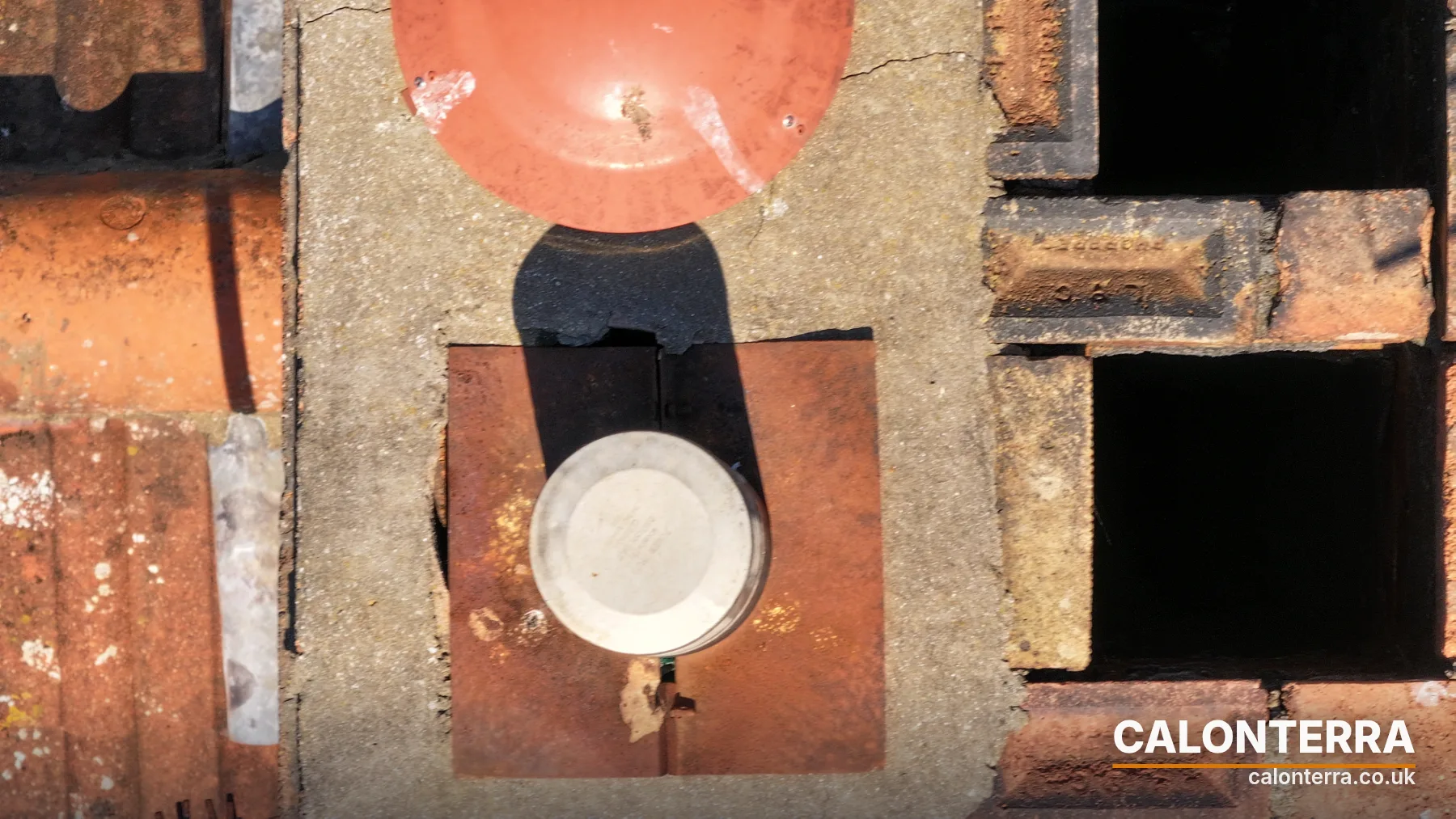
Observation: Significant mortar erosion visible on the top three courses of brickwork. The joints are recessed by roughly 15mm against the brick face and the bedding to two of the pot flaunchings has broken down. Loose material was visible on the stack shoulder.

Why it matters: An eroded stack is the most common route for water to reach the roof void on a property of this age, and the damage typically appears on a bedroom ceiling long before anyone looks at the chimney.

Recommendation: Consult a builder for repointing to prevent water ingress. Ask for the flaunching to be recapped in the same visit while access is already in place.
1000047997

Figure 1 — Chimney stack, north elevation. Mortar loss across the upper courses.

Item 2: Main Roof (West Slope) Priority: Medium

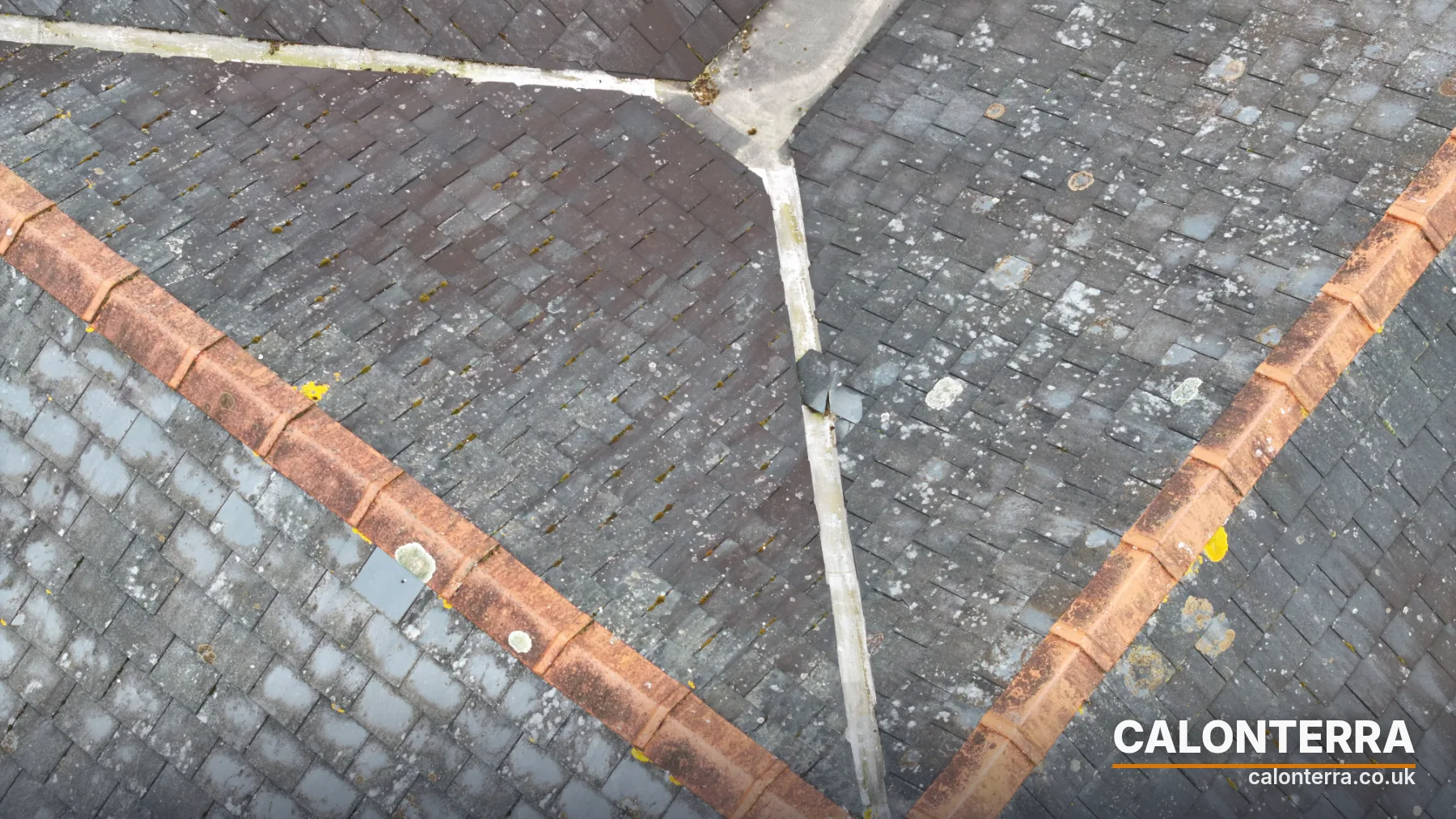
Observation: Single slipped tile located approximately 1m from the gutter line. The tile below it has lifted at the tail, which suggests the fixing nail has corroded rather than the tile having been dislodged by wind.

Why it matters: One slipped tile is a cheap repair. Left in place through a wet winter it exposes the underlay to direct rain and ultraviolet light, and a perished underlay is a re-roof rather than a repair.

Recommendation: Simple repair required to prevent felt damage. Ask the roofer to check the surrounding fixings while up there.
1000041258

Figure 2 — West slope. Displaced slate with lifting to the course beneath.

Item 3: Fixings, Ridge and Verge Priority: Medium

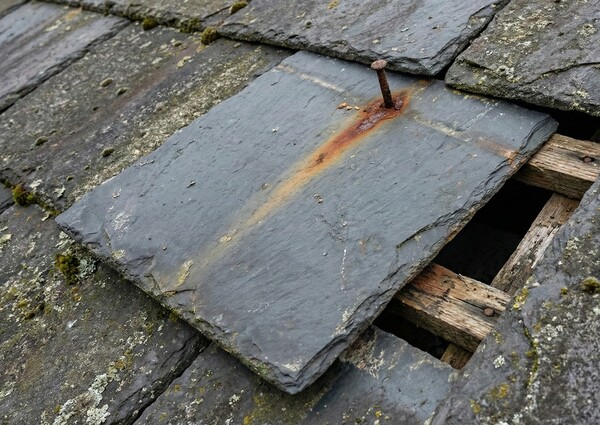
Observation: Close-range imagery of the ridge line shows early nail sickness: several slates are held only by their own weight and the overlap of the course above. Ridge bedding is intact with hairline cracking to two joints.

Why it matters: Nail sickness is progressive and gives useful warning. Catching it while a handful of slates are affected means periodic re-fixing; catching it after a gale usually means stripping the slope.

Recommendation: Monitor annually. Re-fix affected slates during the Item 2 repair visit to avoid a second call-out charge.
Macro zoom drone detail of slate nail sickness showing corroded fixings on a slate roof

Figure 3 — Zoom detail. Corroded fixings visible at the slate head.

Item 4: Fascia and Soffit (Rear Elevation) Priority: Medium

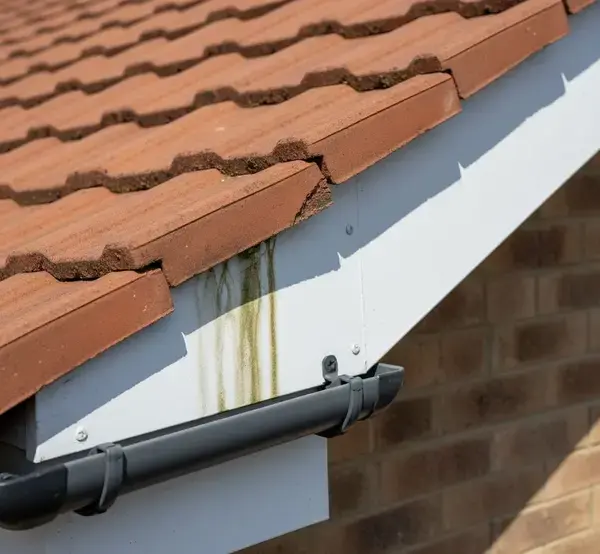
Observation: Staining and softening to the timber fascia below the gutter joint at the rear, consistent with a persistent slow leak rather than a one-off overflow. Paint film has blistered along a 600mm run.

Why it matters: Water tracking behind a fascia reaches the rafter feet, which is a materially more expensive repair than replacing a gutter union.

Recommendation: Reseal or replace the gutter union first, then reassess the timber once it has dried out. Do not decorate over it.
Drone photograph showing water damage and paint blistering on a wooden fascia and soffit board

Figure 4 — Rear elevation. Water staining beneath a failed gutter union.

Item 5: Guttering (Rear) Priority: None

Observation: Clear. No blockages or vegetation visible. Falls appear correct and the outlet is unobstructed.

Recommendation: None. Recorded here so that the absence of a defect is documented rather than merely unmentioned.
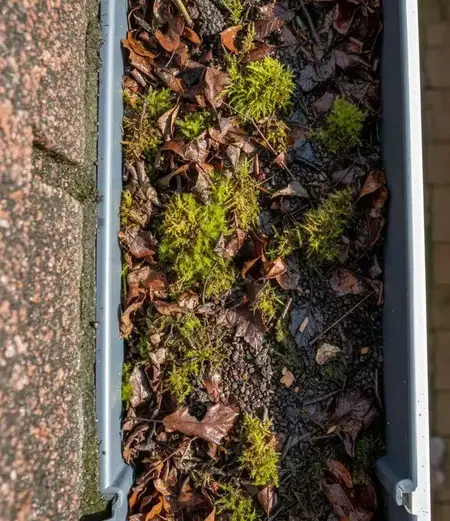
Aerial view along a residential gutter run inspected by drone for blockages and standing water

Figure 5 — Gutter run photographed from directly above, the view a ladder inspection cannot give.

3. WHAT WAS NOT INSPECTED

This was an external visual survey flown from outside the building. It does not cover the roof void or loft interior, anything concealed beneath the covering, the condition of timbers other than where visible externally, drainage below ground, or any part of the structure that could not be seen from the air on the day. Vegetation to the boundary restricted the lowest 1.5m of the rear elevation. Those areas are excluded rather than passed.

4. DISCLAIMER

Important Note: CalonTerra is a specialist aerial data capture firm. We are not Chartered Surveyors or Structural Engineers. This report provides high-fidelity visual evidence of the property's external condition. We recommend sharing this report with a qualified tradesperson or surveyor to obtain accurate repair quotes and structural assessments.

How to Read a Report Like This One

The priority flags are advisory, not a survey grading

High, Medium and None describe how soon we would want the item looked at if the property were ours. They are not RICS condition ratings and they are not a substitute for one. A High flag means water is getting somewhere it should not, or is about to; a Medium flag means the cost of fixing it will rise noticeably if it is left; None means we looked and found nothing to report.

Every finding is tied to a frame you can see

Nothing in the log is asserted without a photograph attached to it. If a report tells you a chimney needs repointing but shows you nothing, you are being asked to take an opinion on trust. The point of flying a camera at the defect is that you, your roofer and your solicitor are all looking at the same object. The full image set travels with the report for exactly that reason.

We do not quote for the repairs we find

We are not roofers and we do not take commission from any. That separation is the whole value of an independent inspection: there is no version of this report in which finding more defects earns us more money. Take the findings to two or three trades and compare like for like.

Absence of evidence is recorded as such

Section 3 exists because a survey is only as useful as its honesty about its own limits. Dense vegetation, a neighbouring building overhanging the flight path, or a covering that simply cannot be seen from above will all leave gaps. Those gaps are written down. A report that reads as though everything was seen, when it was not, is worse than no report at all.

What the Flight Itself Involves

A survey of a house this size takes roughly forty-five minutes on site. There is no scaffolding, no ladder against the guttering, no roof tiles walked on, and nobody working at height. We arrive, carry out the on-site safety assessment, note the wind and the airspace, brief anyone present, fly a structured pattern over each elevation and then close down. Neighbours are told what we are doing before the aircraft leaves the ground, and we photograph the subject property only.

The processing afterwards is where the time actually goes: reviewing every frame at full resolution, discarding the ones that add nothing, and writing findings in language a homeowner can act on. That is what produces a document like the one above rather than a folder of pictures.

Questions About the Report

How long does it take to receive the report?

The written report and the full-resolution image set are normally issued within 24 to 48 hours of the flight. Where a sale or an insurance deadline is driving the timing, say so when you book and we will prioritise the write-up.

Does the report include a repair quote or costings?

No. We deliberately do not price repairs, because we do not carry them out. The report describes what is there and what condition it is in, so that you can obtain quotes from roofers or builders who are all looking at the same evidence rather than each forming their own opinion from the pavement.

Will a mortgage lender or insurer accept this report?

It is visual evidence, not a valuation or a structural certificate. Insurers and loss adjusters routinely accept dated high-resolution imagery in support of a claim. A lender's valuation is a separate instruction that only an appropriately qualified surveyor can carry out, though our imagery is often used to answer a retention query raised by one.

What happens if the survey finds nothing wrong?

You still get the report, and it is still worth having. A dated, documented clean bill of health is what stops a vendor's roof being used to knock money off a purchase price, and it gives you a baseline to compare against after the next storm.

Do I need to be at the property during the inspection?

Not usually. We need lawful access to a safe take-off point and the owner's permission to fly, which for a pre-purchase survey means the vendor or their agent. Many clients are hundreds of miles away and see the roof for the first time in the report.

How many photographs are included?

A typical house generates somewhere between eighty and two hundred usable frames. The report itself carries the frames that show something worth acting on; the complete set is supplied alongside it so your roofer can look at anything we did not flag.

Where This Fits

The example above is a residential condition report. The same capture method supports several different deliverables depending on why you are asking:

If you want a report on your own property, tell us the address and what is worrying you and we will say plainly whether a drone survey is the right tool for it.